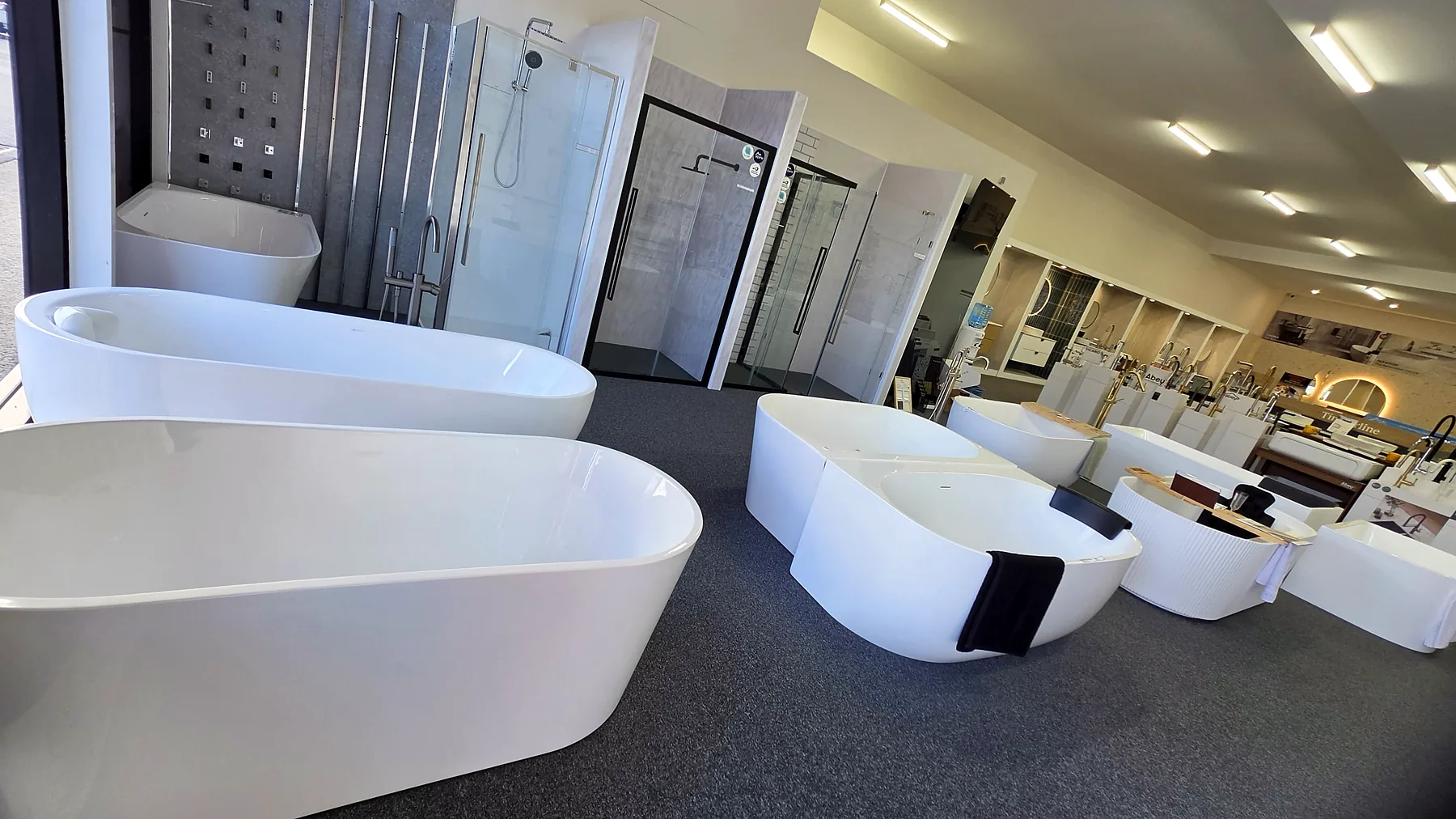
- A freestanding bath suits a bathroom with spare floor around it, where the bath is the feature of the room.
- In a tighter room, a back to wall bath gives you much the same curved look, flush against one wall.
- Choose the filler with the bath: a freestanding bath needs a floor spout or a long wall spout.
- Measure the floor both ways, the doorway and where the plumbing sits, then try the baths in our Osborne Park showroom.
A freestanding bath is a good idea when your bathroom has the floor to let it stand clear of the walls, and the filler is planned early. In a tighter room, a back to wall bath gives you much the same sculpted look while sitting flush against one wall. At The Renovation Centre in Osborne Park, Perth, both are set up on the showroom floor, so you can stand next to each one before you decide.
When is a freestanding bath a good idea?
When you want the bath to be the feature of the room. A freestanding bath stands clear of the walls, so it reads more like a piece of furniture than part of the wall. It works best in:
- A main bathroom or ensuite with spare floor. The bath needs room around it, not just under it.
- A room built around the bath. Under a window or centred on a wall, it sets the look for everything else you choose.
- A plan that has settled the plumbing. Where the bath waste and filler sit is one of the first things your builder will price, so decide it before the floor goes down.
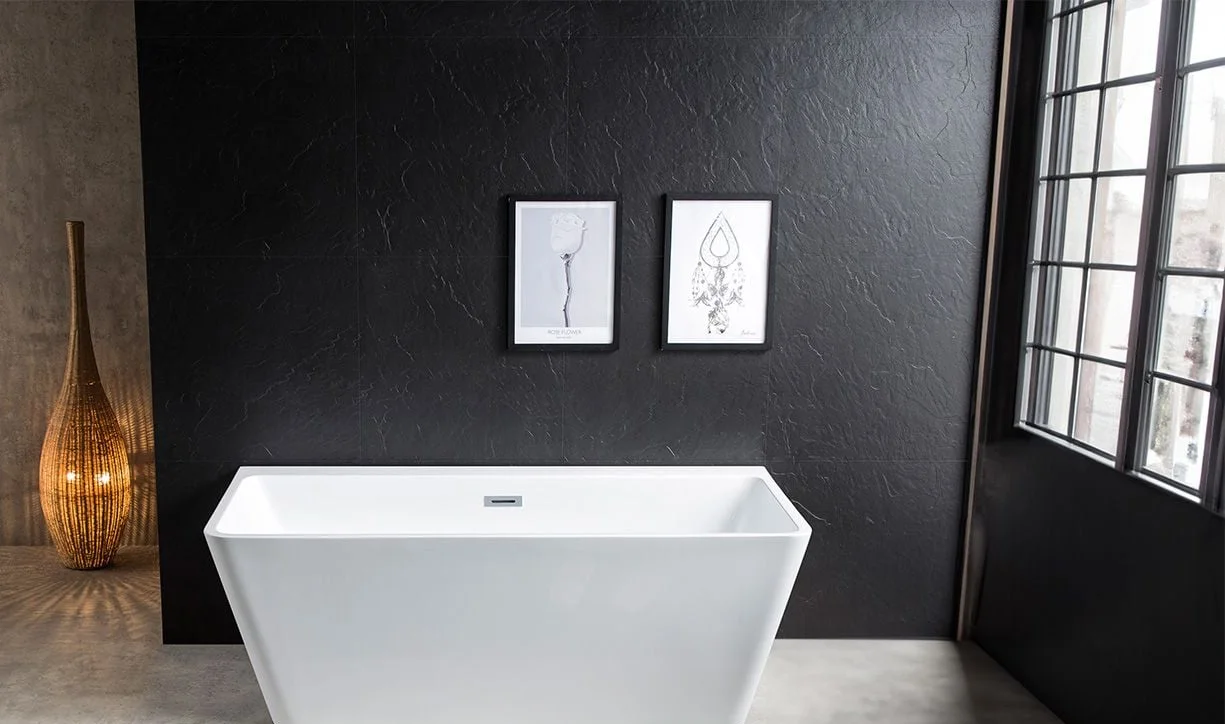
When does a back to wall bath make more sense?
When the room is tight. A back to wall bath sits flush against one wall, which suits a smaller footprint while still giving you the curved outer shape. It gets most of the look for less floor.
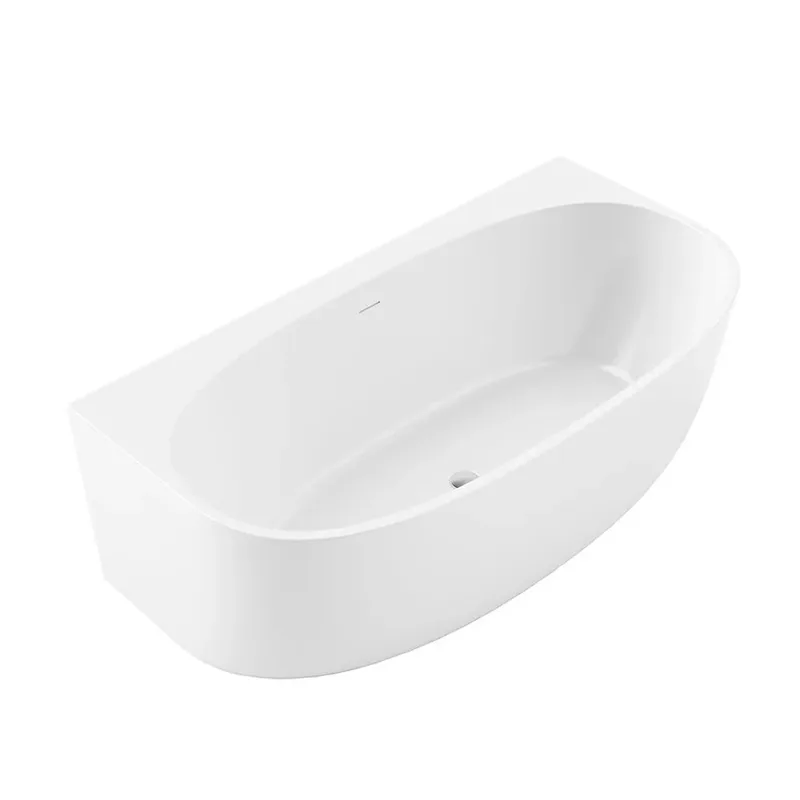
What is the real difference day to day?
- Floor space. A freestanding bath needs floor on every side you want to reach. A back to wall bath gives that floor back on the wall side.
- Cleaning. With a freestanding bath you clean around it, so leave enough room to get in behind. A back to wall bath sits flush, so there is no gap behind it.
- The filler. A freestanding bath needs a floor spout or a long wall spout, so it is chosen with the bath, not after.
- The look. Freestanding is the statement piece. Back to wall keeps the sculpted shape with one side tucked against the wall.
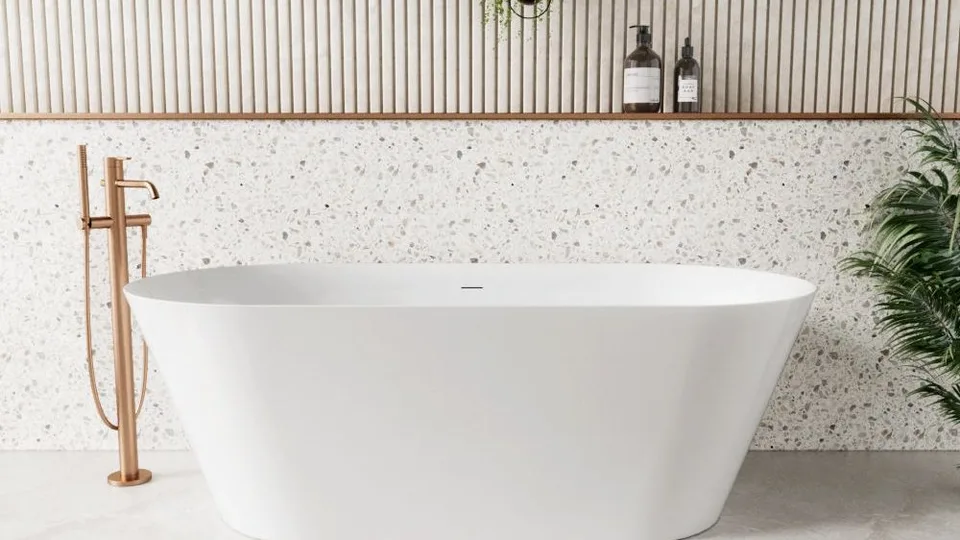
Will a freestanding bath fit a small bathroom?
Sometimes. Freestanding shapes start from around 1300mm, smaller than most other bath types, so the look is possible in a smaller room. If the space is really an alcove, a back to wall or corner bath will often use it better.
Key tip: what usually decides it is the floor around the bath, not the length of the bath.
What should I measure before choosing?
- The floor, wall to wall, both ways. That shows how much room would be left around a freestanding bath.
- The doorway. The bath has to come through it.
- Where the plumbing is now. Mark the bath waste and the taps on a hand sketch.
Can I try a freestanding bath before I buy?
Yes. The oval Spazio and a run of other freestanding baths sit along the front of our Osborne Park showroom at 32 Hutton Street, so you can see how much floor each one really takes. Climb in and check the length, depth and backrest. We do not sell baths online, so bring your measurements and Jacqui will help you work out what actually fits.
See every shape we stock on our baths page, or if the whole room is being done, start with bathroom renovations in Perth.